Monday, December 24, 2018

The Cock and Anchor, by J. Sheridan Le Fanu

"Blarden," said Ashwoode, in a voice low and husky with agitation, "she'll never consent--you can't expect it; she'll never marry you."
"I'm not talking of the girl's consent just now," replied Blarden.
-- from The Cock and Anchor (262)

Spoilers!

I previously read J. Sheridan Le Fanu's last novel, Willing to Die, for the Classics Club, and now have the chance to review his first, The Cock and Anchor (1845). Unlike his more well-known thrillers and tales of terror  this is a historical melodrama, set in the early 1700s and subtitled "A Chronicle of Old Dublin City," which was generally thought to be written under the influence of Sir Walter Scott. Le Fanu does, though, already show a flair for the atmospheric trappings of stormy nights, ruined mansions, sinister strangers, and "nature's beautiful decay" (18) that he would develop in his later masterpieces.

The romance of young Edmond O'Connor and Miss Mary Ashwoode hits a snag when her aristocratic father decides to marry her off to someone wealthier. Complications continue to develop, centered generally around the Cock and Anchor inn, and drawing in various Dubliners, even Jonathan Swift (yup, that one), who turns up in a cameo to be sarcastic and explain that "what I hate I hate entirely" (117).

As in the works of Wilkie Collins, many of Le Fanu's novels show how women in his time, even the rich and privileged ones, were legally at the mercy of men. They supposedly don't need real rights because they're under the protection of husbands or fathers, but frequently those very men are the ones they need protecting from. Here, Miss Ashwoode is put into a situation of quintessentially Gothic danger by the actions of her father and, even more, her deep-in-debt brother, who memorably muses "Ten to one I blow my brains out before another month. A short life and a merry one was ever the motto of the Ashwoodes" (216).

Most of the characters are thinly sketched, especially the central lovers. They're attractive, she's sweet, and he's noble, but there isn't much else to them. This is very unlike future Le Fanu heroines, like the fully developed Maud of Uncle Silas, and the young women of "Carmilla," who've indelibly influenced generations of vampire fiction on page and screen.

To be fair, though, this book does give us the amazing Flora Guy. When I was reading this, I tweeted my amazement to a friend: "I'm reading a novel from 1845 that's a historical melodrama with some Gothic leanings. The heroine was imprisoned by the villain, and I assumed that her love interest would rescue her. But nope! She's saved by a barmaid who was hired as a servant, who plans and orchestrates an escape. So: awesome."

And yes, it is!

There is, unfortunately, also a Jewish moneylender named Mr. Craven, so, oy vey. Reading 19th-century novels is definitely an exercise in appreciating progress where you find it.

Unlike some of the other lesser-known Le Fanu novels, this one is available in a beautiful Valancourt Books edition, with plentiful footnotes, a lengthy introduction, and an appendix including contemporary reviews.

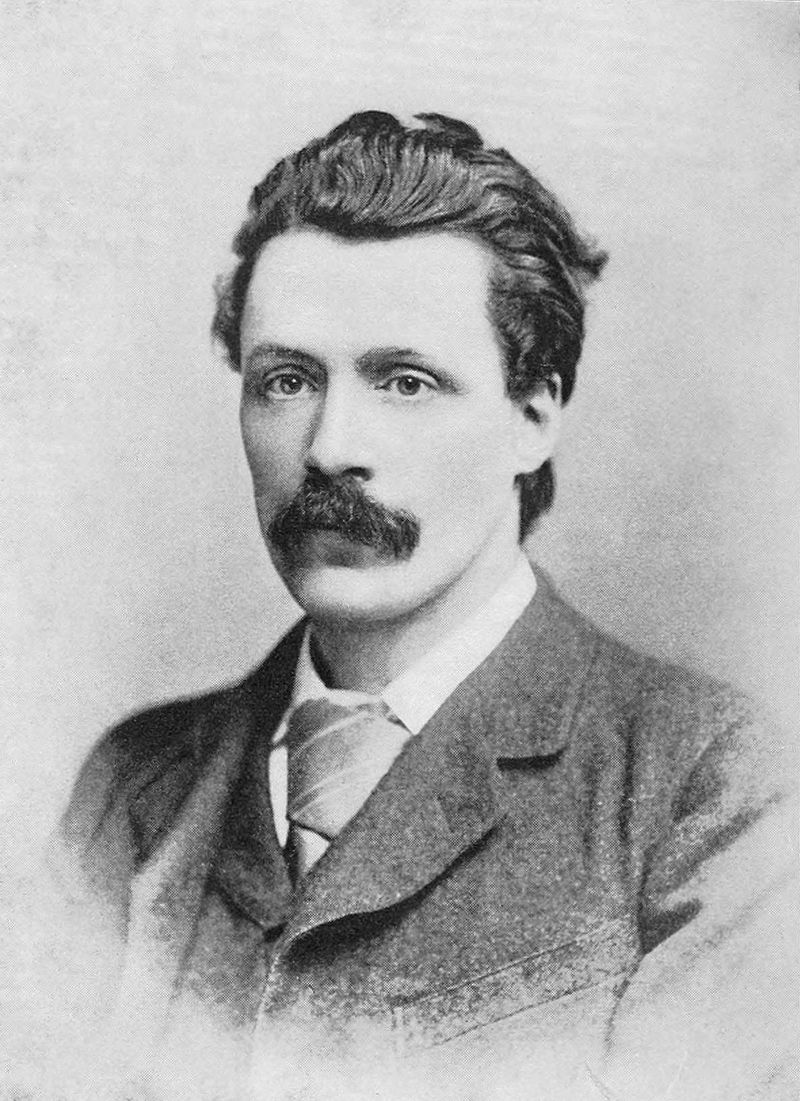
Sheridan Le Fanu 002.png

Le, Fanu J. S. The Cock and Anchor. Kansas City, MO: Valancourt Books, 2010.

Wednesday, December 19, 2018

Classics Club 2

I am getting ahead of the game and launching my second Classics Club list! Of course, as exciting new classics cross my path, I will likely tweak this list multiple times, just like I did the last one. However, I can say that this is a list with no trepidation in it. Maybe it's a bit too skewed to just stuff I want to read (mostly the plethora of 19th century women writers who are suddenly back in print), but, well, it's not like that's a negative. I'm going to shoot for December 2022. That shouldn't be too tough.

The List:
  1. Grant Allen: The Woman Who Did (Read)
  2. Anonymous: The Saga of the People of Laxardal (Read)
  3. James Baldwin: If Beale Street Could Talk (Read)
  4. Honore Balzac: Lost Illusions
  5. Basho: Narrow Road to the Deep North (Read)
  6. Mary Elizabeth Braddon: Dead Love Has Chains
  7. Emma Frances Brooke: A Superfluous Woman
  8. Rhoda Broughton: Not Wisely But Too Well (Read)
  9.  Susanna Centlivre: The Basset Table (Read)
  10. Samuel Taylor Coleridge: Coleridge's Notebooks: a Selection   
  11. Wilkie Collins: The New Magdalen
  12. Catherine Crowe: The Story of Lilly Dawson
  13. Samuel R. Delany: Times Square Red, Times Square Blue (Read)
  14. Charles Dickens: Great Expectations (Read)
  15. Charles Dickens: Hard Times (Read)
  16. George Eliot: Daniel Deronda
  17. Sarah Fielding: The History of Ophelia 
  18. E.M. Forster: Maurice (Read)
  19. Alan Dean Foster: Splinter of the Mind's Eye (Read)
  20. Elizabeth Gaskell: North and South (Read)
  21. Herbert Gorman: The Place Called Dagon (Read)
  22. Frances Harper: Iola Leroy
  23. Mary Hays: The Victim of Prejudice
  24.  Eric Hoffer: The True Believer (Read)
  25. E.M. Hull: The Sheik 
  26. Sophia Lee: The Two Emilys (Read)
  27. J. S. Le Fanu: All in the Dark (Read)
  28. Hilda Lewis: The Witch and the Priest  (Read)
  29. Eliza Linton: Realities 
  30. Delarivier Manley: The New Atalantis 
  31. Florence Marryat: Her Father's Name 
  32. L.T. Meade: The Sorceress of the Strand
  33. Gwerful Mechain: The Works of Gwerful Mechain (Read)
  34.  Adah Isaacs Menken: Infelicia
  35. Nancy Mitford: Christmas Pudding
  36. Kay Nielsen: East of the Sun and West of the Moon    
  37. Emma Orczy: The Scarlet Pimpernel 
  38.  Priestly, J.B: Bright Day (Read)
  39. Olive Higgins Prouty: Stella Dallas
  40. Edogawa Rampo: The Black Lizard
  41. Mary Robinson: Walsingham
  42. O.E. Rolvaag: Considering Our Heritage (Read)
  43. Maria Amparo Ruiz de Burton: Who Would Have Thought It?
  44. Dorothy Sayers: Gaudy Night (Read)
  45. Sir Walter Scott: The Antiquary
  46. Charlotte Smith: The Old Manor House (Read)
  47. Charlotte Smith: The Story of Henrietta (Read)
  48. J.R.R. Tolkien: Beowulf
  49. Flora Tristram: The Worker's Union
  50. Edith Wharton: Twilight Sleep

Thursday, November 22, 2018

The Mummy, by Riccardo Stephens

"You gave me to understand that you came to me because you heard I was honest. Doesn't the quality please you on closer acquaintance? I find it most confoundedly inconvenient myself, at times." -- from the narrator of The Mummy (p. 83)

Spoilers for The Mummy and the Gloria Stuart film Secret of the Blue Room (1933). I hope that isn't itself a spoiler!

Another fine impulse buy from the esteemed Valancourt Books, this 1912 novel makes use of the topical interest in Egyptology to drive an off-beat thriller. The narrator, Dr. Armiston, presents himself as something of a slacker, living a mostly contented life of lowered expectations, with a general practice catering to the better-paid servant class. When the employer of one of his patients dies, he is called to the scene, and becomes drawn into a mysterious high-society club of Plain Speakers, in which a sub-group may have run afoul of a mummy's curse.

Reminiscent of some the doctors in Sir Arthur Conan Doyle's fiction, I found Armiston an interesting point of view character. He's always harping on his advanced age, relative to his new circle of friends, and comments about his regular club that he was "admitted ... on insufficient evidence, at a time when the committee wished to increase the membership" (78). He sometimes has a cynical air, as when he comments that "we all sighed for the Simple Life and to go Back to the Land. Duchesses did so, for week-ends, with the result that rents rose in the country, and the roses, particularly on Sundays, smelt of petrol and were covered in dust" (164). Throughout the novel, investigating the supernaturally-tinged mystery seems to have an invigorating effect on him, distracting him from his disillusioned state and taking more of an interest in life. 

While this is exactly the kind of book that might have its status as a "classic" disputed, there's much interest to be had. The villain ends up a frothing megalomaniac who could easily be played by Bela Lugosi, crying "Madness! Crimes! ... Merely words applied by fools to the unconventional ... before they stamp it out" (221). The heroine, like a modern activist, is appalled at the cavalier treatment of the female mummy as an artifact, when she should be returned to her people and decently buried. And it was interesting to get casual period details, like the cigarettes treated with asthma medication, and the development of Indian restaurants in England, for the Anglo-Indians who had "come home cursing India and all its ways" (82) but then rushed out to eat curry and chutney.

Over Halloween I watched the film Secret of the Blue Room for the first time, and was struck by a general similarity in the two story lines. In both works, a group of men try to prove their lack of superstition -- in one, by bringing a possibly-cursed mummy case into their homes; in the other, by sleeping in a supposedly haunted room -- who then die mysteriously. In each case, the presence of an attractive young heiress in their midst proves to be not at all coincidental, creating a motive for one of her aspiring suitors to use the supernatural against his potential rivals. It made me wonder how common of trope this was in the writing of the period, since it seems unlikely to have been directly inspired.

What is coincidental is that the Mummy's heiress, Miss O'Hagan, has an elder companion named -- what else? -- Mrs. Vavasour (see here and here). Seriously, what is the deal with this name?

This volume was edited, with an introduction, by Mark Valentine, one of my cronies from the Friends of Arthur Machen, which I did not realize when I started it.  

Note: the text contains some racial slurs by the British, particularly against  the Malays, expected for the period but still unfortunate.

Stephens, Riccardo. The Mummy. Edited by Mark Valentine. Richmond, Virginia: Valancourt Books, 2016.


(Photo from Osama Shukir Muhammed Amin, published on 10 April 2016 under the following license: Creative Commons: Attribution-NonCommercial-ShareAlike).

New Grub Street, by George Gissing

"The world has no pity on a man who can't do or produce something it thinks worth money. You may be a divine poet, and if some good fellow doesn't take pity on you you will starve by the roadside. Society is as blind and brutal as fate." -- Struggling novelist Edwin Reardon tries to explain the reality of the situation to his wife in New Grub Street (p. 230)

I started off merrily underlining satirical comments by the ambitious young writer Jasper Milvain, thinking how much I was already enjoying this book. Before I knew it, it turned into one of the most depressing novels I've read in a long time. Not Hans Christian Andersen depressing, but still.

Published in 1891 but set a decade earlier, the novel follows a cross-section of characters who are "dwellers in the valley of the shadow of books" (48). The realistic Milvain is willing to follow whatever trend presents itself, saying "let us use our wits to earn money, and make the best we can of our lives" (43), in contrast with the romantic Edwin Reardon, a sensitive scholar who strives to produce work of value, but whose young wife, originally proud of her literary husband, is completely unprepared for the struggle that ensues. Writers, editors, men and women, young and elderly, all those involved are ground down by "the business of literature" (53).

There's a whole subplot about the incompatibility of Reardon and his wife, Amy. Gissing seems pretty unsympathetic to her situation, especially once they have a child to support, but it's somewhat redeemed by the critique of attitudes about divorce. After what's supposed to be a temporary separation, Reardon writes: "You have no love for me, and where there is no love there is no mutual obligation in marriage ... Have more courage; refuse to act falsehoods; tell society it is base and brutal, and that you prefer to live an honest life" (418).

Early on, when he was still hopeful of success as a novelist despite his noncommercial style, Amy advised him to"do a certain number of pages every day. Good or bad, never mind; let the pages be finished" (86). Just like Nanowrimo! (Except he has to get his straight-away to his publisher, so there's a bit more pressure).

Probably my favorite character was the ineffectual Mr. Biffen, who toils throughout the novel on a hyper-realistic novel called Mr. Bailey, Grocer, which he knows full well will have zero success. If it existed, I'd put it on my Classics Club list right now!

Gissing, George R. New Grub Street.. Ed, Intr. by Bernard Bergonzi. Harmondsworth, Middlesex, England: Penguin Books, 1985.


George Gissing.jpg

Devotions Upon Emergent Occasions. , by John Donne

"We die, and cannot enjoy death."
-- from Devotion I: Insultus Morbi Primus, Meditation (p, 3)

"How manifold and perplexed a thing, nay, how wanton and various a thing, is ruin and destruction."
-- from Devotion 9: Medicamina Scribunt, Meditation (p. 52)

"This whole world is but an universal churchyard, but our common grave, and the life and motion that the greatest persons have in it is but as the shaking of buried bodies in their grave, by an earthquake."
-- from Death's Duel (p. 160)

I've always felt about John Donne's writings the way I do about the films of Guillermo del Toro: I respect them, and admire the obvious artistry in them, but I just don't love them. I wish I did, but despite their often Goth flavor, I don't have the wild enthusiasm for them that I do for sometimes obviously lesser works. There's something about them that puts me at a remove.

Since I knew Donne as a poet from my undergraduate days, I'd always meant to give his prose a fair trial, and settled on the Devotions, written during a serious illness in 1623, along with his final sermon "Death's Duel," preached in 1631. This particular edition, from the Vintage Spiritual Classics series, with biographical material by Izaak Walton, quietly edits the words into modern spelling. While there are, of course, some doozies of beautiful language, and some fantastically quotable stuff -- the "no man is an island" passage is worth its fame -- in the end, I still didn't love Donne the way I hoped I would.

Each devotion is in three segments, an opening "Meditation," a middle "Expostulation" (be aware that this is the part where he quotes and paraphrases scripture, so it's the most like the traditionally boring parts of church), and a closing "Prayer." My favorite bits tend to come from the Meditations, where Donne ponders illness and mortality from all sorts of angles.

As a fan of the Friday the 13th films, I was amused by this quote: "There is scarce anything which hath not killed somebody; a hair, a feather hath done it" ( 40). And as a fan of The Matrix, I found an echo of Agent Smith: "Man hath no center but misery; there, and only there, he is fixed, and sure to find himself" (133).

There are also a few places where I wrote "thank you!" in the margins, for their theological value; for example, "If there had been no woman, would not man have served to have been his own tempter?" (132). Thank you! There's also a great section about how, while God may be a literal God, "thou art a figurative, a metaphorical God too ... How often, how much more often, doth thy Son call himself a way, and a light, and a gate, and a vine, and bread, than the Son of God, or of man? How much oftener doth he exhibit a metaphorical Christ, than a real, a literal?" (118, 119). Again, thank you!


(This famous portrait of Donne appears to be solidly in the public domain).

Overall, I'd say I have a more grounded respect for Donne now, and am glad I had the Classics Club to prod me to read more of his work.

Donne, John, and Izaak Walton. Devotions Upon Emergent Occasions and Death's Duel. New York, NY: Vintage Books, 1999.

Celestina, by Charlotte Smith

"She desired nothing but to be permitted to live single; and be mistress of her time and herself." -- from Celestina (p. 459)

Abandoned in a French convent, young Celestina is rescued by a Mrs. Willoughby and whisked off to England, where she grows into a beautiful woman of rational mind and sound moral fiber. This all makes her irresistible to the sensibly-minded son of the house. Defying financial concerns and social convention, the two are about to marry and embark on what his frivolous sister calls  an "insipid domestic life" (147) when circumstances abruptly change, and Celestina is left alone to take care of herself and the people she cares about, with a small income, limited options, and a desire to maintain propriety at all times.

The heroine in this 1791 novel, a single woman with no family (and thus neither male protectors or proper female chaperones), finds herself in a plethora of awkward social situations, "distressed by civility" (209), caught in a tension between being polite to people she can't afford to antagonize, and needing to guard herself from unwanted male attention.

SPOILERS for Celestina, Pride and Prejudice, and Veronica Mars (really!)

When Willoughby rushes off the night before their wedding, to clear up a mystery he refuses to explain even to his closest friends, I was absolutely certain of where the story was going. And I was right, both about what Willoughby had been told, and the veracity of it. I was very much hoping that the storyline would go full Veronica Mars and reclaim Willoughby's best friend Vavasour, a charismatic rake with a potential heart of gold, a la Logan Echolls, so that those two could end up together.

Alas, despite some subversive elements, it's still an 18th century novel in the end, and Vavasour is revealed as just a creep who's been living with a mistress the whole time he was pledging his undying love for Celestina, and scoffs at her "prudery" about the situation. He insists, as some still do, "Don't I know that women all like the very libertinism they are pleased outwardly to condemn" (406), but Celestina, always feeling "a consciousness of hereditary worth, an innate pride" (104) proves him wrong.

Nobody else blinks at the information, though, as if Celestina should expect any man courting her to be doing the same, and Vavasour is practically considered a saint for being nice to the consumptive Emily, the woman he's been in a long-term sexual relationship with -- less to his credit, than to the condemnation of his society. That subversive element comes in, though, because it seems clear that Vavasour could have happily married Emily, if other people would just mind their own businesses and not condemn a woman for life because she was  lied to and "ruined" by an older man when she was 15.

Jane Austen was known to have read Smith's work, and scholars believe that Celestina inspired some elements of Sense and Sensibility. Even more noticeable to me, Emily's subplot strongly prefigures the story of Lydia and Wickham in Pride and Prejudice (1813), down to the detail of the sister's suitor trying to track the couple down. Of course, the situation was rendered comically in Austen's novel, where here, the single rash act dooms Emily to a life of prostitution, severed from her family and any hope of reclamation by polite society.

Speaking of Vavasour, it's a total coincidence that I started this right after Can You Forgive Her?, which features protagonist Alice Vavasor and her family. Weird.

Smith indulges in much entertaining criticism of polite society and its hypocrisies, which, while times have changed considerably, are still apt as social satire, like the wealthy young woman described as "considering half the world as beings of another species, whose evils she could not feel for, because she was placed where it was impossible she should ever share them" (89).

Interestingly, we also see up-close a case in which a young man of means is pressured to marry a woman he doesn't love, and he doesn't like it any more than our heroines generally do.

As always, the Broadview Press edition is excellent, with editor Loraine Fletcher providing an in-depth introduction and supporting material that help contextualize the novel.

Smith, Charlotte, and Loraine Fletcher. Celestina. Toronto: Broadview Press, 2004.

Thursday, March 8, 2018

Spin 2018

Counting books I've read and haven't posted reviews for yet, my list is actually running short for the next Classics Club spin! So I've divvied it up like so:

1 - 3: Shihab al-Din al-Nuwayri: The Ultimate Ambition in the Arts of Erudition 
4 - 6: William Baldwin: Beware the Cat (etext link
7 - 9: Honore Balzac: Lost Illusions
10 - 12: Samuel Taylor Coleridge: Coleridge's Notebooks: a Selection
13 - 14: Delarivier Manley: The New Atalantis
15 - 17: Kay Nielsen: East of the Sun and West of the Moon 
18 -  20: Maria Amparo Ruiz de Burton: Who Would Have Thought It?

I'm only giving 3 slots to The New Atalantis because I've already started it, and it seems like I should use the spin to do something more random than that.