Thursday, December 27, 2018

Powers of Darkness: the Lost Version of Dracula, by Bram Stoker and Valdimar Asmundsson

"Fog is the main drawback of London. It smothers the town like a vampire sucking the blood and bone marrow of its citizens, poisoning the blood and lungs of the children, and resulting in countless diseases."
-- Jonathan Harker dampens Count Dracula's enthusiasm in Powers of Darkness (p. 10)

This isn’t the strangest book I’ve read for the Classics Club (that's a tough call, but it's possibly the Florence Nightingale book), but the whole concept of an English translation of an Icelandic translation of a British classic is a bit of a mind-bender.

Apparently written with Stoker's input, and possibly access to his notes and earlier drafts, Powers of Darkness (originally published in 1901 as Makt Myrkanna, English version published in 2017) is far from a straightforward translation. Its focus is on Jonathan Harker's stay in Transylvania, which is noticeably expanded, and everything after that -- the vampire's journey to England, the fates of Lucy and Mina (here called Lucia and Wilma), and the efforts to stop his killing spree -- take place in a truncated section, almost an afterthought. The first part takes up 172 pages, and the second, packed with multiple new characters and incidents, is only 46.

Where the vampire women in the original novel are background characters, the single one here plays a major role in the story. Harker has numerous interactions, and almost a full-on relationship. with her, and it's strongly suggested that she was Dracula's wife, with whom he shared "a love as biting as the bitterest hatred, with kisses that burn like glowing iron" (119). Unfortunately, he makes the "great and punishable mistake" (120) of feeling jealousy over her affair, when "her husband should have understood that and let her live her life the way she needed to" (ibid).

The depiction of Dracula as a lascivious being, almost an immortal dirty old man, makes this version a kind of bridge from the ur-text of the 1897 Dracula to the numerous later versions, which bring sexuality more overtly into the storyline.

Another notable edition is a scene that seems ripped from a Hammer horror film, when Harker ventures to an underground vault and finds a mysterious ritual in process, made up of "a mass of people ... 150 people altogether" (183).

There's also a fascinating conspiracy subplot, in which the Count seems to be traveling in aristocratic social circles that he is gathering together for some kind of unspecified world domination, based on his ideas "that the strong must prevail and conquer the world," which Harker refers to as "Darwin's law fluttering vaguely through" his mind (125). "Those of mankind who are 'chosen' have suffered far too long under the unbearable oppression, bigotry, and the shame of majority rule" (191), he writes to his recruits, and it's this anti-democratic endeavor, as much as his vampirism, that Harker and his companions need to stop.

Jam-packed with supporting material, and beautifully designed, Powers of Darkness is something I can highly recommend. It's exciting to see a new, fresh perspective on Dracula after all these years and multiple readings!

See the source image

Stoker, Bram and Valdimar Ásmundsson. Powers of Darkness: The Lost Version of Dracula. Overlook Press, 2016.

The Saga of Grettir the Strong

"Many people wished Grettir a safe journey, but few a safe return."
--  The Saga of Grettir the Strong (p. 33)

Roughly dated to 1400, but set in the 11th century, this Icelandic Saga tells the story of a hero/outlaw, maybe even an anti-hero, reminding us that some people just seem born hard to get along with, and it was ever so.

Young Grettir, lazy and with a cruel streak, grows into a strongman whose occasional helpful, heroic feats against human and supernatural foes alternate with periods of banditry, since he seems to unashamedly believe that his might makes right. While he has some good qualities, he keeps playing mean pranks, holding petty grudges, and generally acting like a jerk, so that as time goes on, he increasingly wears out his welcome wherever he goes.

His situation becomes increasingly melancholy: when asked "whatever drove you to want to come here and cause trouble to my thingmen?", his reply is that "I had to be somewhere" (119). On the run again later, he's told by a remaining ally that "Your only option is ... to settle down somewhere where you do not need to live in fear of your life," and the narrator drily comments "Grettir said he did not know where that might be" (154).

In an episode with symbolic resonance, his troubles greatly worsen when he defeats a ghost, and is cursed for his trouble, becoming "so afraid of the dark that he did not dare to go anywhere alone after nightfall" (86). The ghost, Glam, in life was a loner much like Grettir; when he tells his employers that "I'll be most useful to you if I am left to do as I please" (76), he sounds just like the protagonist. When he scoffs at their new Christian customs, the stage is set for his violent Christmas-time death at the hands of supernatural forces unknown, making him the revenant that Grettir is called in to put down, perpetuating a cycle of violence.

Many of the incidents in Grettir's life deal with the binds he is put in by society, albeit exacerbated by his temperament. He lives in a world defined by codes of honor and machismo, where people are scorned if they don’t seek violent vengeance for wrongs, but then are held accountable by the law when they do. This theme extends to the story of Thorbjorn Hook, a landowner who's pressured to drive Grettir away from his territory: "he found himself in a dilemma, since he did not know any way to overcome Grettir" (173). The locals want the outlaw gone at any cost, but then are quick to judge Hook and turn against him for the means he uses, when direct (supposedly more honorable) methods completely failed.

The narrative takes detours with various characters and the relating of dynastic lineages, but for the most part is sticks with Grettir and his family, giving it a more novel-like feel than some of the sagas. Oddly enough, the story concludes with a trip to Constantinople, then back to Norway, and Rome, giving it a worldly flair that seems far from the farmers and shepherds depicted earlier.

Snippets of poetry, many of them supposedly composed by Grettir in his thoughful moments, are interspersed throughout the narrative, and my favorite is this description of a battle: "The metal-Goths gave/as good as they got" (21). Ha!

I also loved various characters who are mentioned in passing. I want to know more about how they got these names! Here are a few highlights:

Eirik Ale-Eager (13)
Torfa the Poetess (28)
Thord Bellower (62)
Ulf the Squinter (63)
Thorir Autumn-darkness (172)
Thorodd Half-poem (188)

And best of all, Odd the Pauper-poet (69) 


Check out the Icelandic Saga Database, which includes Icelandic and Old Norse versions along with translations into English and some into other languages.

Örnólfur, Thorsson, and Bernard Scudder. The Saga of Grettir the Strong. London: Penguin, 2005.

Monday, December 24, 2018

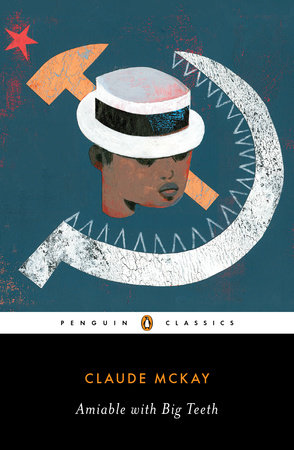
Amiable with Big Teeth, by Claude McKay

"The times were fantastic in a way that was beyond his imagination. Principles had become meaningless in the universal social ferment, yet leaders of the people still talked as if principles were the same principles." (137)

"People must amuse themselves to keep from going insane." (47)
 -- Universal truths from Amiable with Big Teeth

I was familiar with Claude McKay as a poet, sociologist, and figure from the Harlem Renaissance, but this 1941 novel, rejected by his publisher and unpublished during his lifetime, was a surprise when I stumbled upon it at Faulkner House Books. A political satire of pinpoint accuracy, it is sharply focused on a very specific place and time: Harlem in the 1930s, in the wake of the Italian invasion of Ethiopia, when the efforts of black Americans at self-determination and global solidarity are subverted by larger, uncaring forces: in this case, embodied in the Communist party.

Which makes it sound like a heavy slog, and it does contain some speechifying about Trotskyism and other hot-button issues of its time, but it was a lively read, with a lot of finely-defined characters, romances that go in unexpected directions (including an interracial marriage), and period detail at sites from churches to taverns (one of them a gay bar!) where "they're still existing in the hectic speakeasy past and they can't realize that something is rotten with the world" (71). I'm tempted to use the advertising language of "not your grandparents' 1930s," but of course, it is, as it was.

Ethiopian envoy Lij Tekla Alamaya comes to the US on a PR/fundraising mission to help his country, and the upper crust of Harlem society embraces him, in an upswelling of interest in self-determination and global solidarity. His efforts are derailed, however, by backstage backbiting and petty power politics, largely orchestrated by the local Communist Party, which hopes to convert the same base of "Aframerican" people (McKay's consistent term) for their own ends.

It's interesting that, writing in 1941, when people were pressured to take particular sides, McKay was already writing that "the Fascists, Nazis and Communists all believed in and practiced a ruthless dictatorship over the peoples" (76). He's also already talking about "neo-liberals," who "advocated that Aframericans should surrender the right to think and act as a group" (136). The complications of expediency versus integrity are surprisingly contemporary. The black groups working to aid Ethiopia are pressured to join larger white groups, and told that any separation "will give the whites the justification for maintaining barriers against Aframericans" (30) -- although equal pressure isn't put on white spaces to equally include black citizens.

It's also very of-the-moment that people are frustrated with politics because in it, "human life to you is like playing a game of cards which you aim to win by hook or crook" (141-142).

Side note: during Alamaya's flirtation with Seraphine Peixota, the beautiful daughter of a Harlem power player, the following exchange takes place: 

     "This is lovely, but you should have a valet to pack your things and all that."
     "Oh, your father had one ready for me, but I didn't need him. What's the use of a valet in a hotel? To lace my shoes and give me my hat? I still want to feel that I can use my hands. So I let him go."
     "I don't think you should. That was a job for somebody, and there's a lot of agitation about the scarcity of jobs in Harlem." (102)

This is totally the story of Matthew and Molesley from the first season of Downton Abbey, when the middle-class heir is pressured into having a valet to lace his shoes, because otherwise someone is out of a job! One wouldn't have thought these guys would have much in common, but there you go.

McKay's Home to Harlem is definitely on my list now, if not yet on my list. Things change, so it might still turn up there!

Amiable with Big Teeth by Claude McKay

McKay, Claude. Amiable with Big Teeth. New York: Penguin, 2018.

The Army of Truth, by Henrik Wergeland

"Storm the bitter heights of lies!
      Raze them to the ground with Truth!"
-- from the poem "The Army of Truth"

This is one of two very short books I read in wrapping up my Classics Club list, but since I'm on this earth to promote lesser-known classics, which they are, I'm calling it fair! 

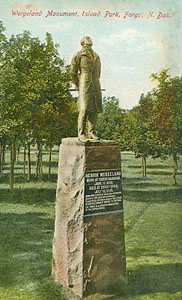
In November, I did a short program at the Sons of Norway on Norwegian poet Henrik Wergeland (1808-1845), inspired by the prominent statue of him that stands in a local park. Although he was a famous writer, and has been called "the father of Norwegian culture," The Army of Truth is literally the only collection of his work that I've been able to find translated into English. It's subtitle, "Dedicated to obtaining equal rights for Jews in nineteenth-century Norway," describes the contents, which are mostly poems related to this crusade

Wergeland's father, a Lutheran minister, had been involved in drafting the clause in their Constitution barring Jews (along with Jesuits) from entering Norway, and the younger Wergeland, whose public activism helped establish Syttende Mai, the day honoring that Constitution, worked -- sources always say "tirelessly" -- to overturn it, in the interests of humanity, equality, and democracy. In short, a good guy to be honored in the park.

The poems in this collection are varied in style, and while the preface suggests that much of Wergeland's literary skill is lost in translation, Anne Born's work here is very readable,  suggesting a flavor of its time without tripping one up in the archaic.

Two of the poems are set at Christmas, hence today's posting. "Christmas Eve" is a narrative that reminds me of Wordsworth's story-poems, but without the sometimes simplistic rhymes. Its tale of prejudice leading to an ironic tragedy is prefaced by a dramatic meditation: 

      "Who can't remember
A storm far worse than any Heaven can send?
A storm as if each soul from Cain's to the one 
      God last condemned,
for cursing Earth, might have escaped from Hell,
and tempted them to turn their back on Heaven?" (12)

"Every religion has a gentle and loving heart" (5), he states, including Muslims, Hindus, and other further-flung groups, although he's hard on those Christians whose hearts are "ice ... or lumps of snow,/stones, within whose crannies dwell/swarms obscene from blackest hell" (22).

This edition from the University of Wisconsin Press was copublished with Thanks to Scandinavia, a group "honoring the rescues of Jews in Scandinavian countries during World War II."

Henrik Wergeland statue.

Wergeland, Henrik A, and Ragnhild Gatlung. The Army of Truth: Selected Poems, in the Historic Fight to Obtain Equal Rights for Jews in Nineteenth-Century Norway. Madison, Wis: University of Wisconsin Press, 2011.

The Expedition of Humphry Clinker, by Tobias Smollett

"I haven't lived so long in Yorkshire to be trepanned by such vermin as you."
--  from The Expedition of Humphry Clinker (p. 166)

I started this 1771 novel twice before I finally got very far into it, even though I'd found it fairly amusing. When you're used to modern narrative conventions, the picaresque can be a hard road to travel. The drive to know what happens next can push us through a book, and keeps us picking it back up every time we set it down. A narrative that's mainly a string of various incidents doesn't have that momentum, and it's easy to get distracted. 

Surprisingly, it’s not really Humphry Clinker’s expedition, since he doesn’t show up until nearly a hundred pages in. Instead, it's the expedition of the Brambles, a wealthy Welsh family on a tour of Bath, London, and parts north, who describe their mostly ridiculous adventures in letters to various friends and confidants. The cantankerous uncle pens lengthy screeds against society and unsanitary conditions (his lengthy, vivid descriptions of foul odors are exactly what I expected, based on Smollett’s reputation); the prudish but husband-hunting aunt argues with everyone; the pretty niece, "as soft as butter, and as easily melted" (14), gets mixed up in romantic intrigue; and the college-aged nephew satirically describes their doings, metafictionally having a meal with his creator along the way.

When they finally meet the eponymous Clinker, a jack-of-all-trades servant, I certainly didn't expect him to be an aspiring Methodist preacher, but his illiterate religious enthusiasm does provide another target of satire.

As the family travels, the novel depicts a larger world in flux, with capitalist pleasure-centers like Bath turning out to be important social levelers, where all classes of society can meet, although no one knows yet whether this is going to be a good thing or not. It's also a world that's increasingly fast-paced, by the standards of the recent past: "All is tumult and hurry; one would imagine they were impelled by some disorder of the brain, that will not suffer them to be at rest" (88).

There's also recurring criticism about the way the corrupting influence of money leads to what we might now call gentrification: for example, a discussion of how people moved to Bath when it was affordable, but "the madness of the times has made the place too hot for them, and they are now obliged to think of other migrations ... Thither, no doubt, they will be followed by the flood of luxury and extravagance, which will drive them from place to place to the very Land's End" (57). That sounds familiar.

While the bitter Uncle Matthew generally insists that "the longer I live, I find the folly and the fraud of mankind grow more and more intolerable" (47), their visit to Scotland is accompanied by his musings on its natural beauties, and what are practically encyclopedia entries about the country's geography, industry, and population, I started to wonder. Fortunately, the footnotes identify the area as the author's home territory, among other historical factoids that provide context for many of the people they meet along the way.

Smollett's style isn't going to be for everyone, but he's definitely a window into a world both completely different and strangely familiar.


Smollett, Tobias. The Expedition of Humphry Clinker. Oxford: Oxford University Press, 2009.

The Cock and Anchor, by J. Sheridan Le Fanu

"Blarden," said Ashwoode, in a voice low and husky with agitation, "she'll never consent--you can't expect it; she'll never marry you."
"I'm not talking of the girl's consent just now," replied Blarden.
-- from The Cock and Anchor (262)

Spoilers!

I previously read J. Sheridan Le Fanu's last novel, Willing to Die, for the Classics Club, and now have the chance to review his first, The Cock and Anchor (1845). Unlike his more well-known thrillers and tales of terror  this is a historical melodrama, set in the early 1700s and subtitled "A Chronicle of Old Dublin City," which was generally thought to be written under the influence of Sir Walter Scott. Le Fanu does, though, already show a flair for the atmospheric trappings of stormy nights, ruined mansions, sinister strangers, and "nature's beautiful decay" (18) that he would develop in his later masterpieces.

The romance of young Edmond O'Connor and Miss Mary Ashwoode hits a snag when her aristocratic father decides to marry her off to someone wealthier. Complications continue to develop, centered generally around the Cock and Anchor inn, and drawing in various Dubliners, even Jonathan Swift (yup, that one), who turns up in a cameo to be sarcastic and explain that "what I hate I hate entirely" (117).

As in the works of Wilkie Collins, many of Le Fanu's novels show how women in his time, even the rich and privileged ones, were legally at the mercy of men. They supposedly don't need real rights because they're under the protection of husbands or fathers, but frequently those very men are the ones they need protecting from. Here, Miss Ashwoode is put into a situation of quintessentially Gothic danger by the actions of her father and, even more, her deep-in-debt brother, who memorably muses "Ten to one I blow my brains out before another month. A short life and a merry one was ever the motto of the Ashwoodes" (216).

Most of the characters are thinly sketched, especially the central lovers. They're attractive, she's sweet, and he's noble, but there isn't much else to them. This is very unlike future Le Fanu heroines, like the fully developed Maud of Uncle Silas, and the young women of "Carmilla," who've indelibly influenced generations of vampire fiction on page and screen.

To be fair, though, this book does give us the amazing Flora Guy. When I was reading this, I tweeted my amazement to a friend: "I'm reading a novel from 1845 that's a historical melodrama with some Gothic leanings. The heroine was imprisoned by the villain, and I assumed that her love interest would rescue her. But nope! She's saved by a barmaid who was hired as a servant, who plans and orchestrates an escape. So: awesome."

And yes, it is!

There is, unfortunately, also a Jewish moneylender named Mr. Craven, so, oy vey. Reading 19th-century novels is definitely an exercise in appreciating progress where you find it.

Unlike some of the other lesser-known Le Fanu novels, this one is available in a beautiful Valancourt Books edition, with plentiful footnotes, a lengthy introduction, and an appendix including contemporary reviews.

Sheridan Le Fanu 002.png

Le, Fanu J. S. The Cock and Anchor. Kansas City, MO: Valancourt Books, 2010.

Wednesday, December 19, 2018

Classics Club 2

I am getting ahead of the game and launching my second Classics Club list! Of course, as exciting new classics cross my path, I will likely tweak this list multiple times, just like I did the last one. However, I can say that this is a list with no trepidation in it. Maybe it's a bit too skewed to just stuff I want to read (mostly the plethora of 19th century women writers who are suddenly back in print), but, well, it's not like that's a negative. I'm going to shoot for December 2022. That shouldn't be too tough.

The List:
  1. Grant Allen: The Woman Who Did (Read)
  2. Anonymous: The Saga of the People of Laxardal (Read)
  3. James Baldwin: If Beale Street Could Talk (Read)
  4. Honore Balzac: Lost Illusions
  5. Basho: Narrow Road to the Deep North (Read)
  6. Mary Elizabeth Braddon: Dead Love Has Chains
  7. Emma Frances Brooke: A Superfluous Woman
  8. Rhoda Broughton: Not Wisely But Too Well (Read)
  9.  Susanna Centlivre: The Basset Table (Read)
  10. Samuel Taylor Coleridge: Coleridge's Notebooks: a Selection   
  11. Wilkie Collins: The New Magdalen
  12. Catherine Crowe: The Story of Lilly Dawson
  13. Samuel R. Delany: Times Square Red, Times Square Blue (Read)
  14. Charles Dickens: Great Expectations (Read)
  15. Charles Dickens: Hard Times (Read)
  16. George Eliot: Daniel Deronda
  17. Sarah Fielding: The History of Ophelia 
  18. E.M. Forster: Maurice (Read)
  19. Alan Dean Foster: Splinter of the Mind's Eye (Read)
  20. Elizabeth Gaskell: North and South (Read)
  21. Herbert Gorman: The Place Called Dagon (Read)
  22. Frances Harper: Iola Leroy
  23. Mary Hays: The Victim of Prejudice
  24.  Eric Hoffer: The True Believer (Read)
  25. E.M. Hull: The Sheik 
  26. Sophia Lee: The Two Emilys (Read)
  27. J. S. Le Fanu: All in the Dark (Read)
  28. Hilda Lewis: The Witch and the Priest  (Read)
  29. Eliza Linton: Realities 
  30. Delarivier Manley: The New Atalantis 
  31. Florence Marryat: Her Father's Name 
  32. L.T. Meade: The Sorceress of the Strand
  33. Gwerful Mechain: The Works of Gwerful Mechain (Read)
  34.  Adah Isaacs Menken: Infelicia
  35. Nancy Mitford: Christmas Pudding
  36. Kay Nielsen: East of the Sun and West of the Moon    
  37. Emma Orczy: The Scarlet Pimpernel 
  38.  Priestly, J.B: Bright Day (Read)
  39. Olive Higgins Prouty: Stella Dallas
  40. Edogawa Rampo: The Black Lizard
  41. Mary Robinson: Walsingham
  42. O.E. Rolvaag: Considering Our Heritage (Read)
  43. Maria Amparo Ruiz de Burton: Who Would Have Thought It?
  44. Dorothy Sayers: Gaudy Night (Read)
  45. Sir Walter Scott: The Antiquary
  46. Charlotte Smith: The Old Manor House (Read)
  47. Charlotte Smith: The Story of Henrietta (Read)
  48. J.R.R. Tolkien: Beowulf
  49. Flora Tristram: The Worker's Union
  50. Edith Wharton: Twilight Sleep